INFRASTRUCTURE FOR REAL PEOPLE
Think about the full equipment loop
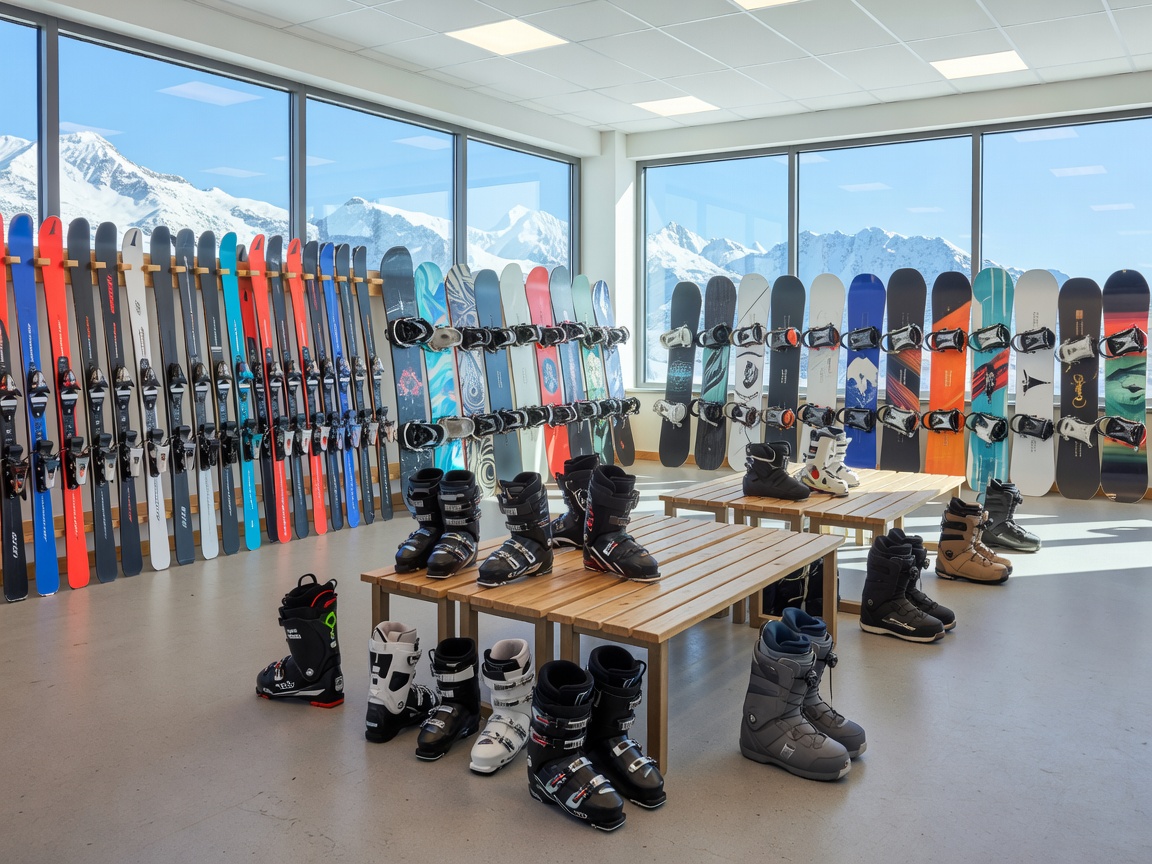
Equipment planning starts before the first lift. Ski and snowboard rental services may be close to a lift, inside a village shop or attached to accommodation. The useful question is not simply whether rentals exist, but how you will collect, fit, store and return equipment around your schedule. Ask providers what they need from you, when collection is possible and whether adjustments are available during your stay.
Boot fit deserves time. Boots should hold the foot securely without creating pain or numbness. If a fit feels wrong, speak with the rental team rather than assuming discomfort is part of the experience. Make sure helmets, poles and other items suit the user and activity. Equipment availability and services differ between operators; this guide does not claim that a particular facility is present at any named resort.
Storage, drying and repair
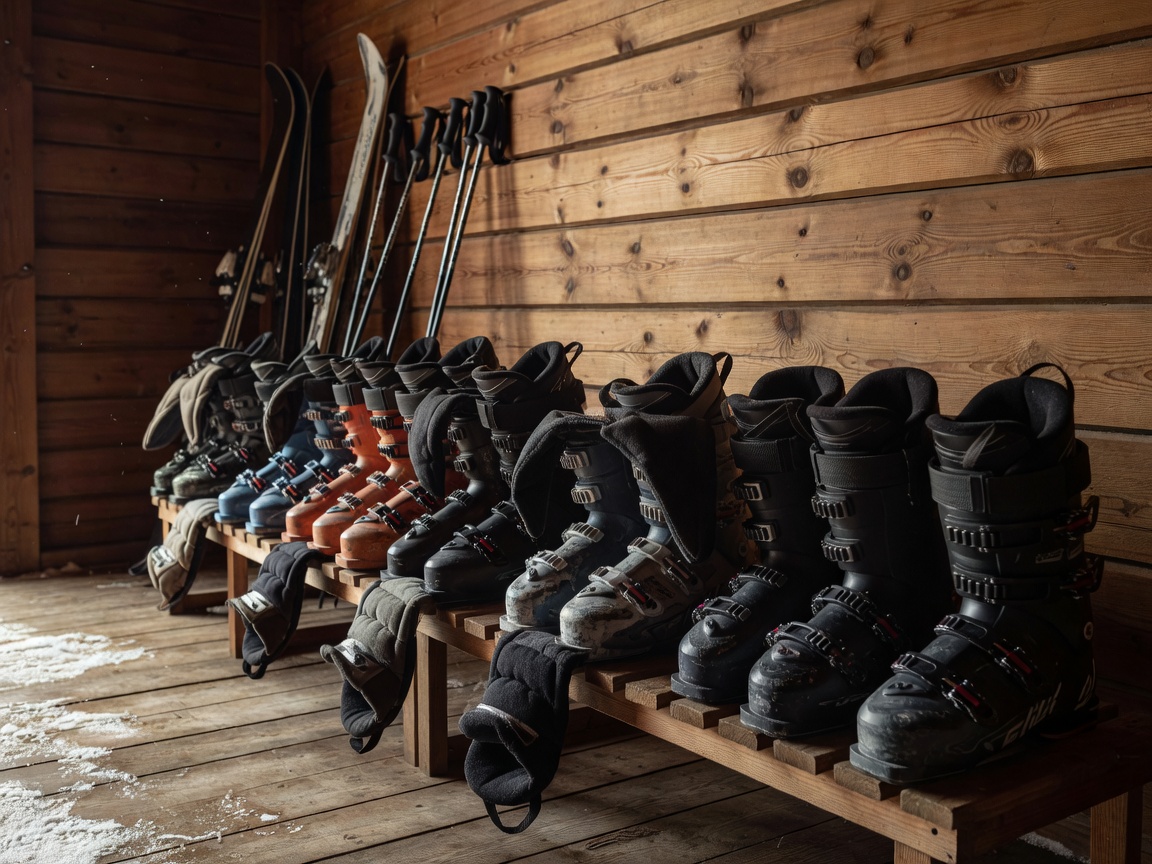
Carrying skis or boards through a village can be tiring, especially for children or groups. Ski lockers and equipment rooms provide a place to leave gear, but check where they are, how they are accessed and whether they are included in your accommodation or rental arrangement. Drying facilities help manage damp gloves, clothing and boots; ask what is available instead of assuming a boot warmer or drying room is standard.
Small repairs can become important when a binding, edge or other component needs attention. Some resorts have specialist shops or workshops, but exact services and opening times vary. Find current information from local providers before relying on a repair option. Carrying suitable personal essentials and following equipment guidance can reduce avoidable disruption.
Learning zones and ski schools
A beginner zone should be easy to identify and reach, with terrain suited to a learner’s current confidence. A practice area near the village may be more convenient than a learning zone accessed after a long lift journey. Ask a ski school about meeting points, lesson language, age groups, equipment requirements and what happens if operating conditions change. Those details are specific to each provider and date.
Lessons are useful not only for technique but also for understanding local mountain routines. Qualified instructors can help learners become familiar with lift use, piste signs and etiquette. If travelling with mixed experience levels, plan how the group will meet and communicate. A map, agreed meeting point and realistic schedule help prevent a small separation from becoming a stressful one.
Lift connections and resort transport
Gondolas, chairlifts and surface lifts connect different parts of a resort. Each has a different boarding process and can suit different journeys; visitors who are unfamiliar with a lift should ask staff for assistance. Check whether the lift you intend to use is operating and whether it serves your route. Wind, weather, maintenance and operational decisions can affect service. Do not rely on a static map as a live report.
Resort transport can connect accommodation, lifts, villages and facilities. Confirm the current route, timetable, stops, accessibility and any ticket requirements through official transport information. A convenient shuttle can change the value of a quieter property, while a walkable base may reduce the need to plan transfers. Include the return trip in your thinking, particularly after a long day.
Compare facilities by your own needs
Families may value close learning areas, changing facilities and equipment storage. Beginners often benefit from clear signs, straightforward rental collection and accessible instruction. Experienced skiers may prioritise the route to lift connections and a reliable place to store kit. Groups should ask about lockers, meeting points and transport. A facility list is only useful if those services are in the right place and available when you need them.
Good for
Visitors who want to compare rental convenience, ski-school access, storage and daily movement around a resort.
What to know
Confirm current services, location, access arrangements, lesson details, equipment fit and transport directly with providers.
Advantages
Well-matched practical facilities can save time and make the start and finish of a day more comfortable.
Limitations
Facilities vary by resort, season, operator and property. A general guide cannot confirm live availability.
For advice on choosing the destination itself, read Winter Ski Resorts. Compare terrain in Skiing & Snowboarding and equipment storage at your stay in Hotels & Chalets.
NEED A HAND WITH YOUR CHECKLIST?